
Booley - Outdoor Store
Content operations and catalogue management

Booley - Outdoor Store
Content operations and catalogue management

Booley’s website was already live and functional, but the underlying system lacked consistency and structure. Product information, images, and inventory details were often handled manually, which led to inconsistencies across the site and mismatches between what was available online and in-store. Without a clearly defined process, maintaining accuracy became time-consuming and prone to error, especially as new stock was added.
The focus of this project was not to redesign the website, but to bring clarity and structure to how it was maintained — establishing consistent workflows, refining internal documentation, and ensuring that every product followed the same standards across the catalogue.
Inconsistent backend processes and lack of standardised workflows led to inaccurate product data, poor inventory alignment, and a catalogue that was difficult to maintain and scale.
This created a disconnect between in-store availability and online listings, leading to stock inaccuracies and mismatched product data
Product information, images, and inventory were managed inconsistently, with no standardised workflow in place
The catalogue became difficult to maintain and scale as new products were added, due to a lack of clear internal processes and documentation
For a business relying on accurate and up-to-date product listings, these gaps led to operational inefficiencies, increased errors, and a diminished customer experience online.l documentation, and ensuring every product met the same standard across the catalogue
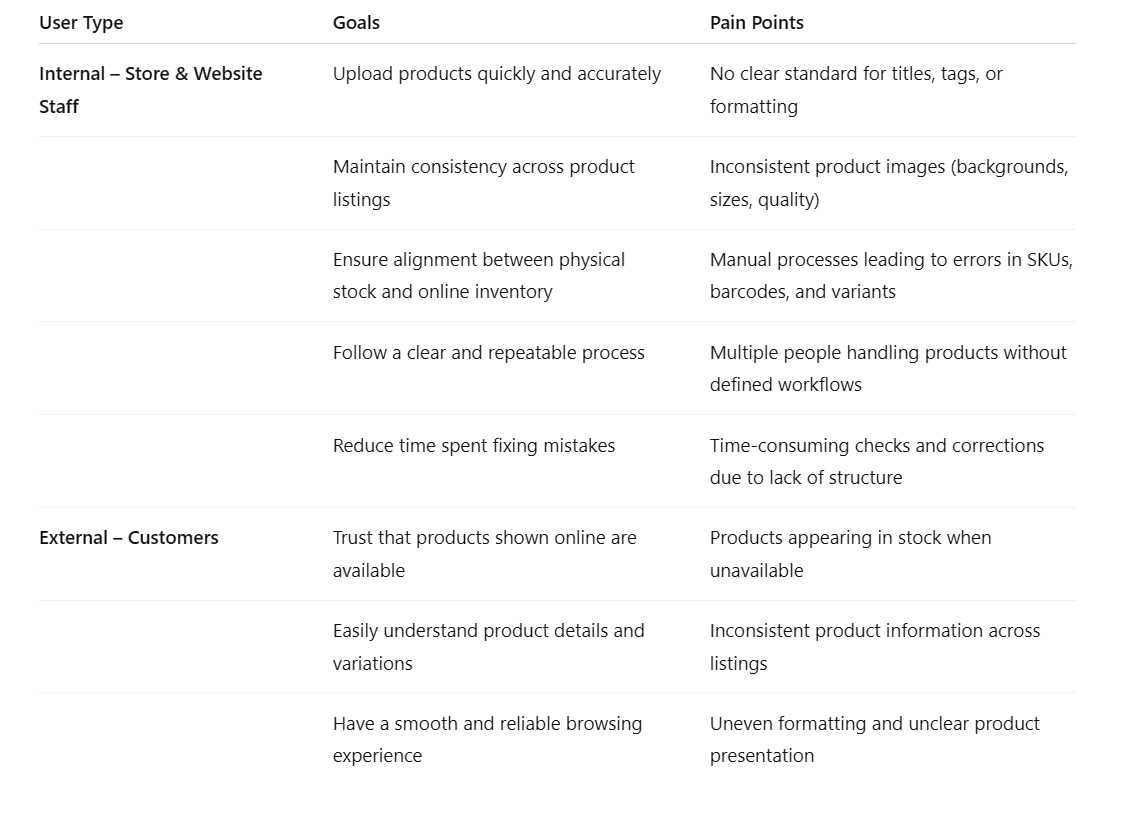
The system was used by both internal staff managing product uploads and inventory, and customers browsing and purchasing products online — making consistency and accuracy critical across every touchpoint.
Ensure product information is accurate, consistent, and easy to manage internally, while providing customers with a clear, reliable, and trustworthy browsing experience.
A lack of structured processes led to inconsistencies in product data, images, and inventory, creating inefficiencies for staff and resulting in confusion and mistrust for customers due to incorrect or unclear product information.
Improve accuracy of product data, including SKUs, images, and descriptions
Reduce confusion for both staff and customers through clearer structure
Minimise errors by introducing a more reliable and repeatable workflow
Standardise the product catalogue to ensure consistency across all listings
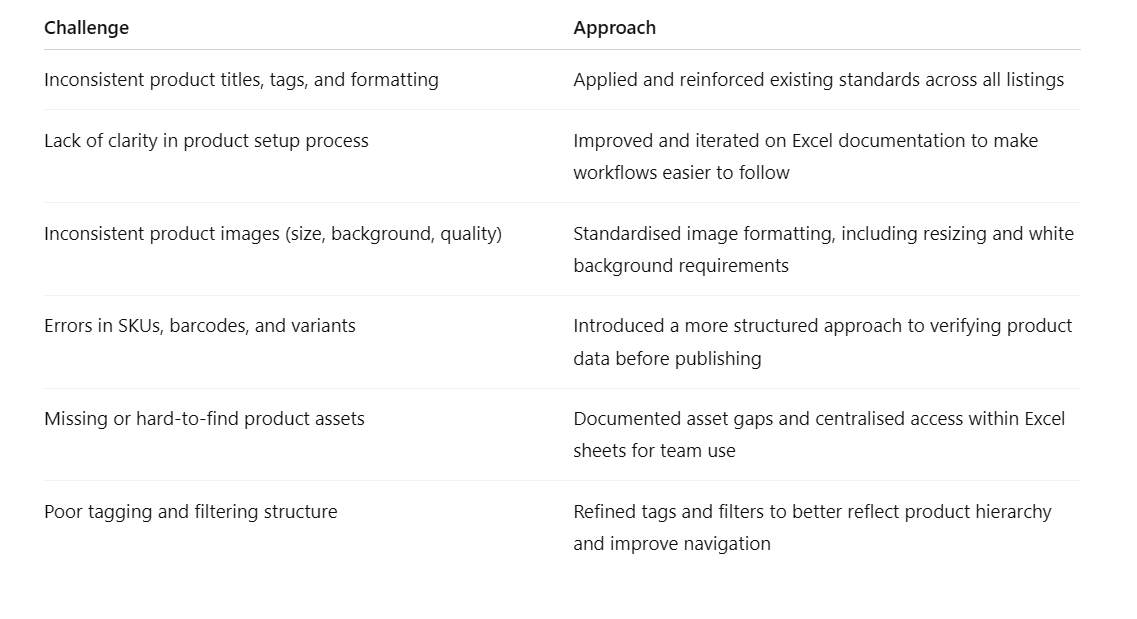
Identified inconsistencies across product titles, tags, images, and inventory through trial-and-error and daily use of the platform
Gained an understanding of the system through hands-on work in Shopify, combined with observation of how staff handled stock intake and product uploads
Reviewed existing product listings and updated them to align with internal standards for structure and presentation
Worked on new stock intake (Spring/Summer collection), ensuring products were set up consistently from the start
Iterated on existing Excel documentation by adding missing information, improving clarity, and making assets more accessible to the team
Organised and documented backlogs where product assets were missing, ensuring they could be resolved systematically
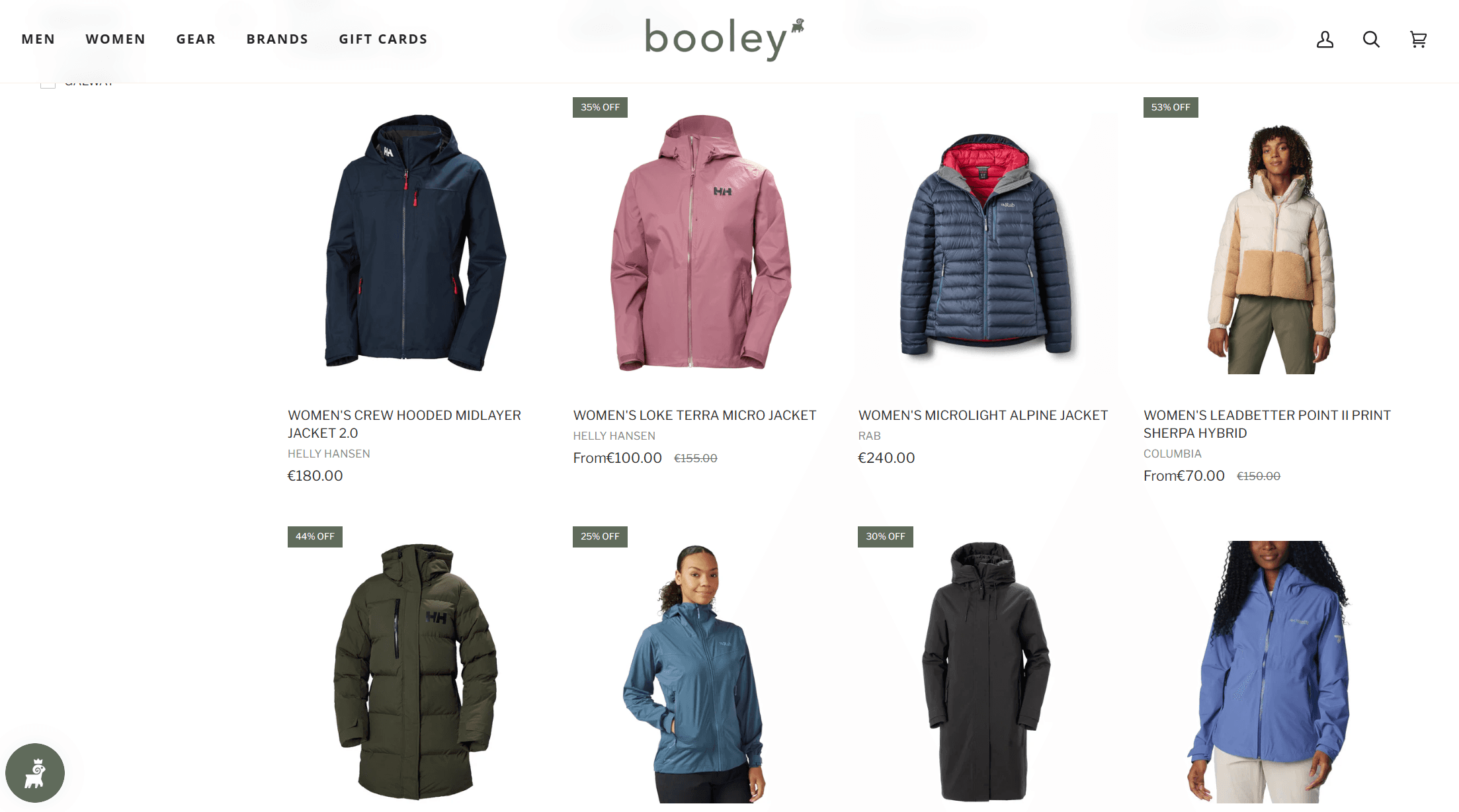
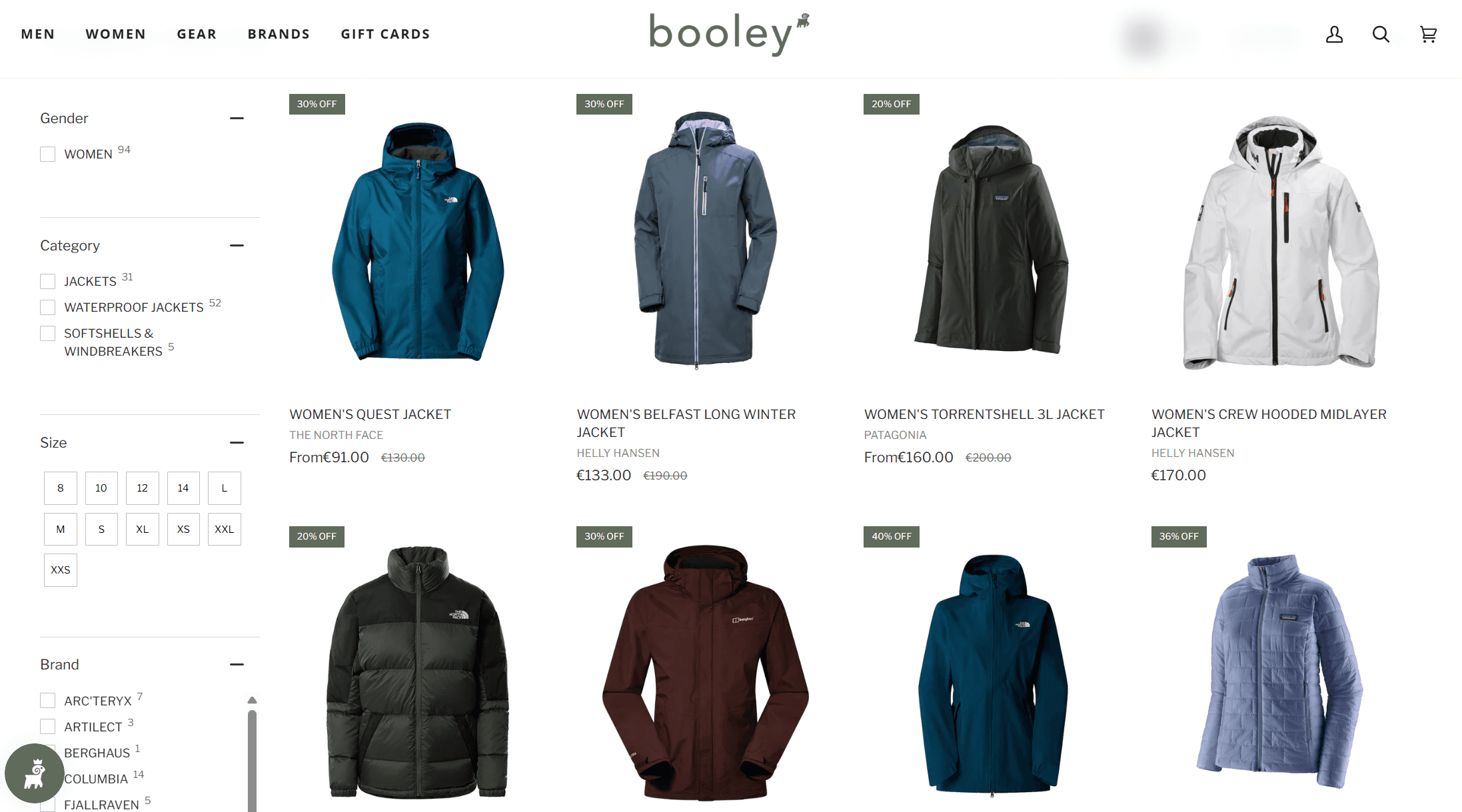
Refined tagging and filtering structures to better reflect product hierarchy and improve usability across the site
Improved internal documentation to support a clearer, more repeatable workflow
Reinforced existing product standards to ensure consistency across the catalogue
Standardised product images to create a more cohesive visual experience
Reduced reliance on memory by making processes easier to follow and reference
Improved organisation of product data, including tagging, filtering, and asset management
Ensured new stock (Spring/Summer collection) followed consistent setup from the beginning
Initially missed key details such as product types, tags, and vendor names, which affected how products appeared and were categorised on the website
Incorrect size conversions, barcodes, or SKUs led to issues with inventory accuracy and POS scanning during in-store purchases
Realised that small errors in product setup could lead to larger problems, such as customers ordering items that were not actually in stock
Without a structured process, tasks relied too heavily on memory, increasing the likelihood of mistakes
Created a more consistent workflow for verifying product data, including SKUs, barcodes, tags, and product types
Introduced a checklist-based approach to ensure every product was reviewed before being made live
Developed a method to trace and retrieve accurate product information using invoices and purchase orders
Ensured all required steps were followed systematically rather than relying on memory or assumption